Source CE Certified Hinge Knee Brace for Sports, Recovery, and Daily Support
Compare 30 listings of CE certified hinge knee brace options tailored for athletes, patients, and active adults. Explore varying materials like polyester and cotton, sizes from S to L, and customization services from verified Chinese manufacturers.
Key considerations
Products List




Comprehensive Sourcing Guide
Strategic Sourcing Guide for CE Certified Hinge Knee Braces
Understanding the Product Category and Technical Specifications
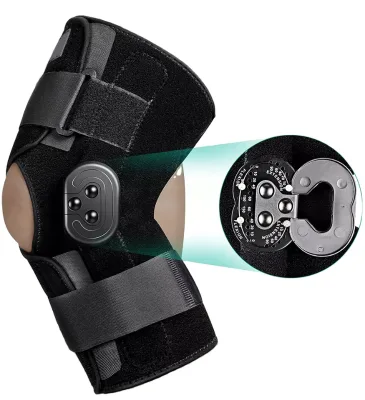
The global market for orthopedic support devices includes a diverse array of knee braces designed for varying degrees of mobility restriction and rehabilitation. When sourcing a CE certified hinge knee brace, buyers must first distinguish between general compression sleeves and structural braces that utilize mechanical hinges. The hinge mechanism is the critical component that allows for controlled flexion and extension while providing lateral stability. Based on observed product attributes in the current supply landscape, these devices are primarily engineered for adult populations, with specific models designated for comprehensive protection and fracture fixation support.
Technical specifications for these braces vary significantly across manufacturers, necessitating a detailed review of material composition and dimensional data. The observed product range includes braces constructed from polyester and cotton blends, materials selected for their durability, breathability, and skin compatibility. Polyester variants often offer enhanced structural integrity for heavy-duty use, while cotton components may be integrated to improve comfort against the skin. The physical dimensions of the braces are equally critical; observed specifications indicate standard sizing in M/L and S/M/L configurations, with specific model numbers such as TRA691, TRA681, and TJ-KM015 representing distinct structural designs.
The mechanical properties of the hinge itself are not always explicitly detailed in general product listings, but the functional requirement remains consistent: the device must provide external fixation support. Some models are categorized specifically as "External Fixators" intended for fracture fixation, implying a higher load-bearing capacity than standard sports support braces. The weight of these devices is another observable metric, with single-unit weights ranging from approximately 0.35kg to 1.35kg depending on the complexity of the hinge and the amount of padding included. Buyers should verify the specific weight and size of the unit they intend to purchase, as the "Single package size" can vary from compact dimensions like 13x5x2.5 cm to larger shipping cartons measuring 50cm x 30cm x 47cm.
Compliance Verification and Certification Standards
For medical devices and orthopedic supports entering the European market, the CE marking is a mandatory requirement indicating conformity with health, safety, and environmental protection standards. When sourcing a CE certified hinge knee brace, the buyer must verify that the certification is not merely a claim but is backed by valid documentation. The observed supply chain data confirms that products in this category often carry CE certification alongside ISO standards. Specifically, listings indicate the presence of CE, RoHS, and ISO certifications, which suggests a multi-layered compliance approach.
The specific ISO standard referenced in the context of medical devices is often ISO 13485, which pertains to quality management systems for medical devices. While this standard is widely recognized as a benchmark for manufacturing quality, buyers must exercise caution and request current certificates rather than assuming compliance based on general market knowledge. The presence of a CE mark implies that the manufacturer has undergone a conformity assessment procedure, but the level of scrutiny depends on the risk classification of the device. Knee braces intended for fracture fixation or comprehensive protection may fall under higher risk categories, requiring more rigorous testing and notified body involvement than simple compression sleeves.
Buyers should request a Declaration of Conformity (DoC) from the supplier. This document legally states that the product meets the essential requirements of the relevant EU directives. The DoC should explicitly list the standards applied, such as EN standards for medical devices. It is also prudent to verify the scope of the certification; a certificate might cover a specific model number (e.g., TJ-KM015) but not the entire product line. Furthermore, while some background data mentions BSCI certification, this is primarily a social compliance standard regarding labor practices and is distinct from the technical safety certifications required for medical device market access. Therefore, BSCI should not be conflated with CE or ISO medical compliance.
Cost Drivers and Pricing Dynamics
The pricing of CE certified hinge knee braces is influenced by a complex interplay of factors, including material costs, manufacturing complexity, and certification expenses. The observed price range in the market spans from $0.50 to $60.00 USD per unit. This wide variance reflects the difference between basic, single-material braces and complex, multi-component systems with advanced hinge mechanisms and custom branding. The lower end of the price spectrum typically corresponds to standard models with minimal customization, while the higher end includes braces with specialized features, such as adjustable hinges, premium materials, or custom packaging.
Material composition is a primary cost driver. Braces utilizing high-grade polyester or specialized cotton blends may command a higher price point due to the cost of raw materials and the processing required to ensure they meet medical-grade standards. Additionally, the inclusion of a robust hinge mechanism adds significant manufacturing cost compared to fabric-only designs. The complexity of the hinge, whether it is a simple pivot or a multi-axis adjustable system, directly impacts the unit price.
Customization services also play a crucial role in pricing. The supply data indicates that OEM and ODM customization is widely available, with options for customized logos and specific packaging requirements. Implementing custom branding, such as printing a buyer's logo on the brace or packaging, incurs additional setup and production costs. The packaging itself, whether it is a simple box or a detailed carton with specific dimensions (e.g., 30cm x 32cm x 12cm), affects the overall cost. Furthermore, the Minimum Order Quantity (MOQ) is a significant factor; observed MOQs range from 1 unit to 1000 units. Buyers ordering small quantities may face higher per-unit costs due to the lack of economies of scale, whereas bulk orders can significantly reduce the average cost per unit.
Typical Applications and Functional Requirements
The functional applications of hinge knee braces extend beyond simple sports injury prevention to include serious medical rehabilitation and fracture management. The observed product attributes highlight "Health Care" and "Rehabilitation Therapy Supplies" as key usage categories. Specifically, some models are designated for "Fracture Fixation," indicating their use in post-surgical recovery or acute injury management where immobilization and controlled movement are critical. These braces serve as external fixators, providing the necessary structural support to stabilize the knee joint while allowing for gradual rehabilitation.
The "Applicable People" field consistently lists "Adults," confirming that these devices are not designed for pediatric use without specific modification. The "Protection class" is described as "Comprehensive Protection," suggesting that the braces are intended to offer a high level of stability and injury prevention. This is particularly relevant for athletes recovering from ligament tears or individuals with chronic knee instability. The hinge mechanism allows for the regulation of the range of motion, which is essential for preventing re-injury while promoting healing.
In addition to medical applications, these braces are often used in occupational settings where knee strain is a risk. The "Usage" category includes general support for daily activities, making them versatile tools for both clinical and non-clinical environments. The ability to customize the product, including the logo and packaging, allows suppliers to tailor these braces for specific healthcare providers, sports teams, or corporate wellness programs. The "Condition" of the product is listed as "New," ensuring that buyers receive fresh, unused inventory suitable for medical use.
Supplier Evaluation and Origin Analysis
When evaluating potential suppliers for CE certified hinge knee braces, the geographical origin of the manufacturer is a key consideration. The observed data points to several key production hubs, including Hengshui, Guangdong, and Fujian in China. These regions have established manufacturing ecosystems for medical devices and orthopedic supplies. Guangdong, in particular, is known for its advanced manufacturing capabilities and proximity to major ports, which can facilitate efficient logistics. Fujian and Hengshui also contribute significantly to the supply of textile-based medical products.
Supplier evaluation should extend beyond location to include their capacity for customization and quality control. The availability of OEM and ODM support is a strong indicator of a supplier's flexibility and ability to meet specific buyer requirements. Buyers should assess whether the supplier can accommodate custom logos, specific packaging dimensions, and tailored product models. The "Customized" attribute confirms that many suppliers are willing to adapt their standard products to meet unique client needs.
Quality control is paramount, especially for medical devices. Buyers should inquire about the supplier's internal quality assurance processes and their adherence to the claimed ISO standards. While the supply data mentions CE and ISO certifications, it is the supplier's responsibility to maintain these standards consistently. A reputable supplier will have a documented quality management system and will be transparent about their production processes. Additionally, the "Single gross weight" and "Single package size" data provided in listings can serve as a baseline for verifying the consistency of the product. Discrepancies between the stated weight and the actual received weight could indicate quality control issues or packaging inefficiencies.
Long-Term Procurement and Quality Assurance Strategies
Establishing a long-term procurement strategy for hinge knee braces requires a focus on consistency, scalability, and continuous quality monitoring. The observed MOQ range of 1 to 1000 units offers flexibility for buyers to start with small test orders and scale up as demand grows. However, for long-term partnerships, buyers should aim to negotiate stable pricing and consistent lead times. The "Product Weight" and "Size" specifications should be locked in during the contract phase to ensure that future orders match the initial samples.
Quality assurance should be an ongoing process rather than a one-time check. Buyers should implement a system for regular product audits, which may include random sampling and testing of the hinge mechanism's durability and the material's integrity. The "Certificate" and "Certification" data suggest that suppliers should provide updated documentation periodically to ensure continued compliance with changing regulations. It is also advisable to maintain open communication with the supplier regarding any changes in materials or manufacturing processes that could affect the product's performance.
Packaging and logistics are also critical components of long-term procurement. The observed packaging details, such as "Carton size: 13x5x2.5cm" and "Packing in white box," indicate that efficient packaging is a priority. Buyers should ensure that the packaging is robust enough to protect the braces during transit, especially given the delicate nature of the hinge mechanisms. The "Packing Details" also suggest that some suppliers offer bulk packaging options, such as "10 Pieces/Box," which can streamline the distribution process for larger orders.
In conclusion, sourcing CE certified hinge knee braces requires a meticulous approach to technical verification, compliance checks, and supplier evaluation. By focusing on the specific attributes observed in the market, such as material composition, certification status, and customization capabilities, buyers can make informed decisions that ensure the delivery of high-quality, compliant products. The wide range of available models and the flexibility of suppliers in terms of OEM/ODM services provide ample opportunities for buyers to find solutions that meet their specific needs. Ultimately, a successful procurement strategy relies on a clear understanding of the product specifications, a rigorous verification of certifications, and a commitment to maintaining high standards of quality and safety throughout the supply chain.
FAQs
What certifications do CE certified hinge knee braces typically hold?
These braces typically hold CE, RoHS, and ISO certifications. Buyers should verify specific model numbers like TJ-KM015 carry valid documentation rather than assuming general compliance covers the entire product line.
How much do CE certified hinge knee braces cost per unit?
The price range spans from 0.50 to 60.00 USD per unit. Costs vary based on material complexity, hinge mechanisms, and whether customization like OEM logos is included in the order.
Which materials are used for CE certified hinge knee braces?
Common materials include polyester and cotton blends. Polyester offers structural integrity for heavy-duty use, while cotton components may be integrated to improve comfort against the skin during extended wear.
Can buyers customize the logo and packaging for these braces?
Yes, OEM and ODM customization is widely available. Suppliers support customized logos and specific packaging requirements, such as white boxes or cartons with dimensions like 30cm by 32cm by 12cm.
What is the minimum order quantity for CE certified hinge knee braces?
The minimum order quantity ranges from 1 to 1000 units. Small test orders are possible, but bulk orders often reduce the average cost per unit due to economies of scale.
Where are CE certified hinge knee braces typically manufactured?
Manufacturing hubs include Hengshui, Guangdong, and Fujian in China. These regions have established ecosystems for medical devices, with Guangdong known for advanced manufacturing and proximity to major ports.
What are the standard sizes for CE certified hinge knee braces?
Standard sizes include M/L, S/M/L, and specific measurements like 55-59cm. Buyers must verify the specific size of the unit, as single package sizes can vary from 13x5x2.5 cm to larger cartons.